

Investing hours on online casino sites teaches you one thing pretty quickly: design is more than aesthetics. It shapes how you experience things, how you move through the site, and even what games you decide to play. The moment I opened 21bit Casino, its look stood out to me. It didn’t look like all the others, which commonly feature harsh blacks, fiery reds, or shimmering gold. Instead, 21bit offered me a more modern and refined palette. That’s why I chose to examine its color scheme and accessibility features under the microscope, from a regular user’s chair. This is not about design school talk. It’s about how this element performs when you’re playing at midnight, or using your phone in bright sunlight, or if your eyes have different needs than most. I’m going to detail the specific colors, the contrast, how easy the text is to read, and how all this connects to the site’s functionality. The goal is to see if it all adds up to a gaming environment that’s both accessible and genuinely enjoyable for a global community.
First Impressions: A Contemporary and Atmospheric Design
Opening 21bit Casino’s homepage seemed like stepping away from the garish, loud color schemes that fill the online gambling world. The overall look is built on a foundation of deep blue-grey. Imagine a twilight sky, not a plain, empty black. It’s a complex, slightly grainy dark shade that provides a peaceful and focused background. The highlight is a vibrant electric blue, kept for things you can select: buttons, active tabs, key highlights. This blue comes alive against that dark background, forming perfect little indicators telling you where to go. Hints of a soft, luminous purple and crisp white complete the main palette. The vibe is atmospheric, modern, with a hint of the future. It suits the site’s crypto angle without coming across as cold or impersonal. You perceive of a slick digital dashboard, not a gilded traditional casino ibisworld.com hall. For me, that was a pleasant change of pace and a lot kinder on the eyes during long browsing sessions.
Color Theory and Player Mood
These colors weren’t selected at random. Dark blue backgrounds typically imply trust and stability, a subtle nudge that’s probably helpful when you’re managing real money. That bold cyan blue shouts technology and clarity, perfectly pulling your gaze toward “Deposit,” “Play,” and “Bonus” buttons. The purple accents sprinkle in a little imagination and a sense of top-tier quality. Most importantly, this mix sidesteps the intense, pressing feeling you receive from walls of red, which can unconsciously add stress. My sessions here felt more like chosen entertainment and less like a high-pressure environment. That subtle shift in mood rendered my gameplay feel more balanced, which is a big part of thoughtful design that often goes unnoticed.
Detailed Assessment: Text Clarity and Contrast Quality

A attractive color scheme fails if you struggle to read the text. On this front, 21bit Casino does a solid job with a few small caveats. The most frequent combination—white text on that dark blue-grey background—provides excellent contrast. Reading game descriptions and paragraphs for a long time did not leave my eyes tired. This high contrast ratio is a clear win for basic accessibility. Headings and key labels often use that bright cyan, which also cuts sharply against the dark. But I did spot places where lower-contrast text is used, like for secondary terms or legal disclaimers in a medium grey. Designers use this trick to create a visual pecking order, but it means those bits demand more effort to read. For someone with mild eyesight issues, or if you’re playing in a dim room, that could be a small but real hurdle.
How does it perform on a phone in bright light? Pretty well. A dark theme can act like a mirror in direct sunlight compared to a light mode, but the strong difference in brightness between the text and background ensures clarity. The real test was the interactive parts. Buttons filled with cyan and labeled in white are impossible to miss. Just as crucial, the visual feedback when you hover over them—a slight glow or shade shift—is unmistakable. I never found myself wondering if something was clickable or not, which is a bedrock requirement for accessibility. The contrast between a button’s normal state, its hover state, and its clicked state is handled carefully, so the interface guides you clearly at every step.
Portable and PC Experience Coherence
A solidly constructed site should seem and work the same regardless of what device you’re on. 21bit Casino uses a adaptive design that effortlessly reshapes itself from a desktop monitor down to a phone screen. What is important is that the color scheme and its accessibility strengths stay perfectly intact. The dark background, cyan highlights, and white text scale down without a hitch. On mobile, contrast is still more important because everything is smaller and screen glare is a continual battle. Here, the color choices prove their worth. Touch targets like game icons and menu buttons are dimensioned and colored for easy tapping. The mobile menu maintains the same clear contrast rules, so you’re never left wondering how to navigate. This consistency lets you to build a trustworthy mental map of the site. You learn what the colors mean once, and that knowledge works whether you’re on a tablet at the kitchen table or a phone on the bus. That cuts out a major source of potential hassle and confusion.
Flexibility Across Screen Types
I examined the site on different screen technologies, mainly LCD and OLED. On OLED screens, where the dark background can blend into perfect blacks, the cyan and purple accents look exceptionally vibrant and deep. It’s a visually immersive experience. On standard LCD screens, the contrast stays strong, though the darkest areas appear as a very deep grey rather than true black. The smart part is that the design doesn’t depend on an OLED’s perfect black to function. The colors remain distinct and the interface is completely usable across the huge range of devices people actually own, from older budget phones to fancy gaming monitors.
Accessibility Features: What’s Included and What’s Missing
Examining accessibility means looking past just color contrast for integrated features that support users with diverse needs. 21bit Casino’s design provides a strong base layer of visual accessibility through its high-contrast scheme. This aids users with low vision or color vision deficiencies. But the platform appears not to include more sophisticated or customizable accessibility tools. I couldn’t find a dedicated accessibility menu with settings like:
- A high-contrast toggle to change to a more pronounced light-on-dark or dark-on-light theme.
- Buttons to adjust text size separately from your browser’s zoom function.
- Controls to deactivate animations or flashing elements, which is essential for users affected by motion or at risk of seizures.
- Any direct announcements of screen reader optimization, though the underlying HTML structure is reasonably decent.
Leaning on a user’s device configuration—like system-wide zoom or text size—is a incomplete approach. The site scales adequately with browser zoom up to about 200%, though some layout components can start to crowd each other past that point. For a contemporary platform, adding a basic accessibility panel would be a major move toward inclusivity. It would demonstrate a commitment to every user, not just those with standard 20/20 vision.
Areas for Improvement and Player Feedback
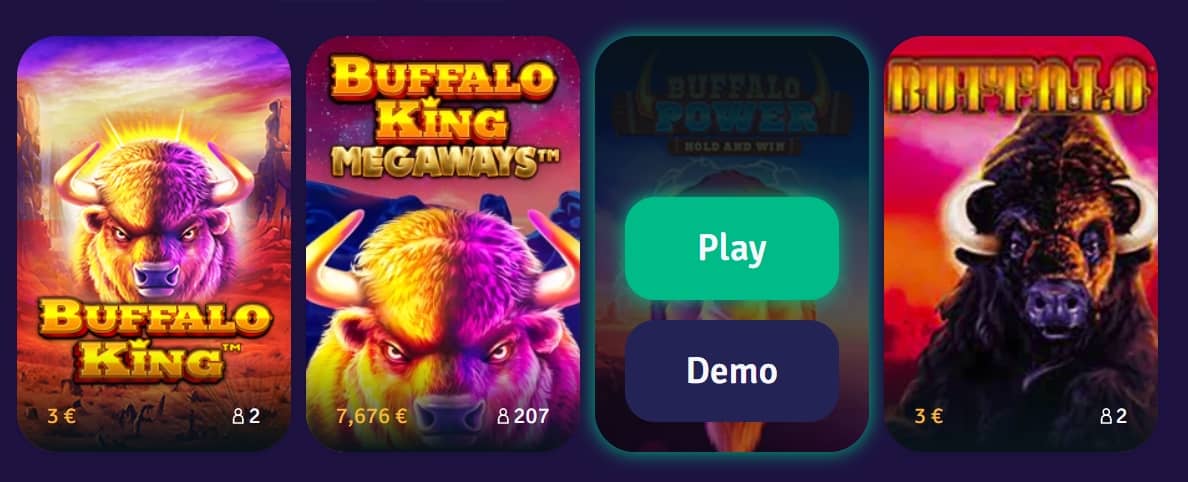
The core design is strong, but my navigation of the site pointed to a few aspects where tweaks could deliver the interaction more enjoyable for all users. The most obvious shortcoming is the lack of a optional light/dark mode toggle. Some people just like light displays, or they may be playing in a location where a dark display is less suitable. Restricting all users into a one theme, regardless of quality it is, reduces individual preference. Furthermore, that insufficiently contrasting grey font employed for additional info ought to be adjusted to satisfy WCAG AA standards for small font dimensions. Moreover, I observed some advertising ads or game icons have text baked into the picture itself, and that text at times has insufficient differentiation. That’s not within the site’s main style control, but it’s something the creative team should remember when they create new visuals.
My recommendations for 21bit Casino include to introduce a small set of user-controlled options https://21-bit-casino.org/en-au/. A basic icon in the site top bar could allow users to perform a few essential actions:
- Switch between the current Dark Theme and a novel Light Theme with inverted shades.
- Boost the text size across the full site.
- Enable a “Colorblind-Friendly” filter that modifies the cyan and purple highlights to colors more straightforward to differentiate for common forms of color vision deficiency like deuteranopia.
Functions like these would not ruin the site’s distinct visual identity. Instead, they’d build flexibility on top of it, in turn positioning the casino a frontrunner in user-focused aesthetics in this industry.
Comparison with Industry Standards
Comparing 21bit Casino’s design versus the standard industry offering shows how it differs. Numerous big casinos go for a “luxury” look: black, gold, deep red, and white. These tend to be high-contrast, but they often feel visually heavy and tied to old-school gambling dens. Others use super bright, almost cartoonish colors to appear fun and casual. 21bit’s techy, cooler palette is unique. On pure accessibility, its built-in dark mode with high-contrast text beats many light-themed rivals where white backgrounds can cause glare and strain. That said, some older or more corporate platforms have actually started adding more explicit accessibility tools, recognizing how important they are.
21bit’s strategy feels like “accessibility by default.” They integrate good principles into the initial design, rather than treating them as an supplementary feature you have to look for. This is a more modern, integrated approach. It means the average user gets a comfortable experience right away, which is excellent. But it may overlook users who need those explicit settings to make the site work for their particular situation. So, 21bit is in front of the pack on core design principles, but it has some progress to achieve on the frontier of customizable features, which are growing commonplace on major websites and apps.
Conclusive Opinion: A Carefully Crafted, Easy-to-Use Platform
After looking at everything, my take is that 21bit Casino’s color scheme and its accessibility foundation are real assets. The current, atmospheric palette isn’t just appealing to look at. It fulfills a role: it reduces eye strain, creates a soothing tone, and uses strong contrast to create a clear, easy-to-navigate interface. The visual consistency between desktop and mobile is excellent, providing you a reliable experience wherever you play. The design shows a strong grasp of basic visual accessibility, especially helping users who have difficulty with low-contrast sites or deem overly bright themes jarring.
But the site’s accessibility is largely passive, locked into that single default view. The lacking user controls—a theme toggle, a text scaler, colorblind modes—keep it from attaining its complete potential as an inclusively designed space. For many users with normal vision and no particular theme preferences, the 21bit Casino interface is a success. It’s comfortable, instinctive, and stands out from a sea of sameness. For users with certain visual needs or a definite preference for light mode, it works well within the boundaries of its one, well-designed design. They just have to use their own device or browser settings for any additional customization. In the end, it’s a strong foundation. Building on it with more flexible features could create a whole new benchmark for what a easy-to-use online casino should appear and function like.